Academic and digital sovereignty, and open science
From Shared Values to Collective Action Turning shared ambitions into coordinated policies, collective decisions and lasting digital and academic sovereignty was the keynote session on digital sovereignty at the October Council of National Open Science Coordination (CoNOSC) Members Meeting.
What does it really mean for European research to be in control of its own digital future? Wladimir Mufty, Programme Manager for Digital Sovereignty at SURF, the Dutch national research and education network, provided a clear vision. Digital sovereignty, he argued, is not about isolation, protectionism or simply where data is stored, and it is not an all-or-nothing state. It is about values: the ability to embed public values in our digital environments, algorithms and datasets; it is about humanity and justice. Alongside autonomy, he stressed resilience: thinking ahead about what can go wrong and what choices remain when it does. The challenges are real, from the dependence on and political power of Big Tech to disinformation, EU-US data transfers and threats to academic freedom, all reinforced by closed ecosystems in which every new adoption deepens lock-in. He underlined that in closed systems, every additional adoption reinforces the next.
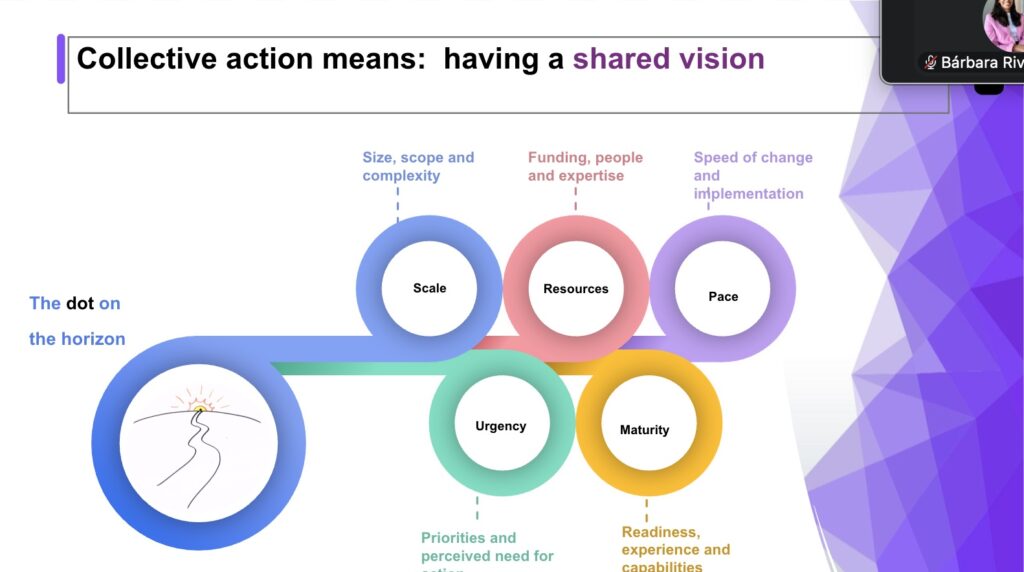
Mufty highlighted two groups of risks for Open Science: loss of access and research autonomy (through extraterritorial policies, commercial dependencies and reliance on non-EU infrastructures), and loss of data quality and trust (through weak quality assurance, fraudulent content and poor AI training datasets). Drawing on the EOSC Steering Board expert group’s opinion paper, he proposed six principles: openness with responsibility, autonomy through federation, control of data and workflow quality, portability and interoperability, accountability and trust, and resilience and preparedness. Collective action, he said, means having the right conversation, sharing a vision, enabling alternatives together (such as PeerTube, Mastodon and Nextcloud), avoiding “sovereign-washing” and building the ecosystem we believe in, with a role for everyone from EU institutions to individuals.
The discussion added important nuances. France has made academic sovereignty one of its seven ambitions in its Open Science strategy and is planning a national open source Git platform, while the Netherlands is taking a similar approach to shared tools. One contributor cautioned that sovereignty is often framed as good and dependence as bad, whereas research sometimes needs to rely on others for infrastructure and data, so interdependency can be a positive value. For example, with human resources, secure international mobility matters as not all scientific and science-enabling expertise is available at national level, or even at EU level. The narrative must change so that sovereignty is not dismissed as activism or ideology. Others added that a shared vision must include awareness, as researchers are often unaware of what is available or of the consequences of their choices.
In the Netherlands and beyond, a shift is now under way. For years, the guiding principle was “don’t bother the user with IT, it should just work.” Now, a growing movement wants to talk with people about the values built into the systems they use. This paradigm shift brings challenges, as asking people to become pioneers can leave others feeling left behind. But it points towards governments and their research communities making more informed, conscious choices about its tools for a resilient future.
academic sovereignty collaboration collective action digital sovereignty independence infrastructure sovereignty