Open Science in a changing policy landscape
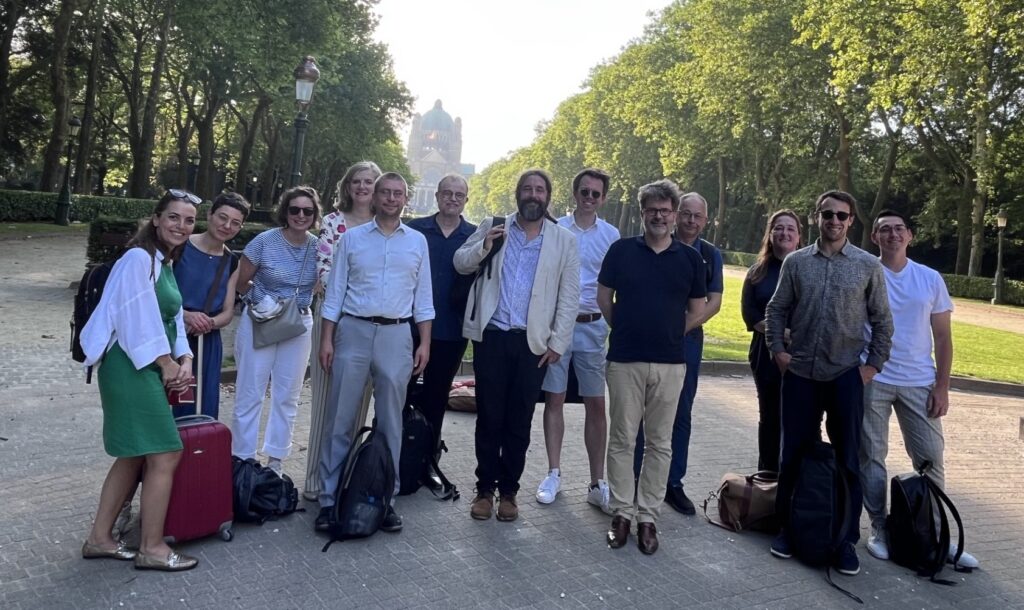
How is Open Science being affected by political change, new policy priorities and pressure on research budgets? And what is needed to sustain Open Science policymaking across Europe?
These questions were at the heart of a recent meeting bringing together national Open Science policymakers from a range of European countries in Brussels. The June CoNOSC Meeting was kindly hosted by BELSPO, The Belgian Science Policy Office.
Political change and competing priorities
Recent government changes across Europe are affecting Open Science policy and budgets, making it important to secure funding commitments in the short, medium and long term. At the same time, in some countries, a shrinking Open Science workforce is making it harder to connect Open Science with emerging priorities.
The European Open Science Cloud (EOSC), the future European Research Area Act (ERA Act), academic sovereignty, research integrity and software policy, among others, offer opportunities, while rapidly evolving debates on artificial intelligence (AI) and research security require a clearer OS position and greater dialogue across policy communities. I.e. there is a need to bring OS into discussions on AI and research security rather than letting these policy areas develop separately.
On research security, this does not affect all research in the same way, and participants stressed the need for a nuanced approach that keeps risks in perspective and does not conflate research security with defence-related research. Open Science practices can contribute to research security through research integrity, research transparency, reproducibility and FAIR data.
From policy to practice
While there is broad support for Open Science at the European policy level, participants noted that European standards remain limited and that national initiatives need to be scaled up to implement policy change. More practical tools for open science policies are needed, including indicators, indexes and catalogues integrated with the European Open Science Cloud.
Open Science should also be distinguished from superficial forms of “open washing”: its value lies in its practices, evidence of impact and the skills and expertise required to implement them. How was discussed at length.
Scholarly communication, specifically Diamond Open Access, and research assessment were highlighted as two areas requiring particular attention going forward.
Diamond Open Access is gaining importance at European level, while Open Science and research assessment remain too often disconnected, with assessment still relying heavily on closed research information and journal impact factors. Participants called for Open Science to be integrated into national research assessment policies, alongside greater engagement with CoARA (Coalition for Advancing Research Assessment) and the Barcelona Declaration on open research information. It was also pointed out that Open Science policymakers need to become more involved in discussions on research evaluation, particularly regarding the recognition of Diamond OA as these discussions are not sufficiently taking place within CoARA.
The people behind Open Science
The discussion on Open Science career pathways was inspired by keynotes by Judith Biernaux (FedOSC Belgium), Mira Söderman (Federation of Finnish Learned Societies), and Professor Anne Laurent (Montpellier Institute of Data Science), who highlighted the often-overlooked role of research support staff and their critical role in providing excellence in OS.
Data stewards in particular are increasingly important for AI readiness, FAIR data, EOSC and data security, but their roles remain diverse and sometimes poorly defined. Many positions are funded through short-term projects rather than being established as permanent roles. Participants stressed the need for clearer career paths, far better recognition of research support roles and fair working conditions. Anne Laurent showed that data stewards is by no means the only important role related to research data. All these professional functions should be kept distinct and recognised rather than conflated into the single role of data steward. For more details, see the report Research data: characterising the key functions involved in their management, processing, dissemination and use (Données de recherche : caractérisation des fonctions clés liées à leur gestion, leur exploitation, leur diffusion et leur utilisation, soon to be translated into English).
There was also discussion of the need for stronger institutional and government support, including through national roadmaps and budgets, to help stabilise these positions.
Key takeaways
Across the discussions, a number of priorities emerged for national Open Science policymakers:
· Secure sustainable funding for Open Science, including across political transitions.
· Strengthen connections between Open Science, AI, research security, digital sovereignty and research integrity, without compromising the principles of Open Science and building on the maturity of development in Open Access.
· Develop practical tools, standards and indicators to support implementation.
· Include research assessment in national Open Science plans.
· Engage more closely with CoARA and promote Open Science practices within research assessment.
· Support sustainable and equitable Open Access models, including repositories and Diamond Open Access.
· Establish clearer career pathways and more stable positions for research data roles (including data stewards) and other Open Science support roles.
The discussions showed that Open Science policymaking is taking place in a rapidly changing environment. Sustaining progress will require continued attention to policy, funding, implementation and the people needed to deliver it.
AI Europe Open Access open science policy policymaking reform research assessment research careers research security sustainability